
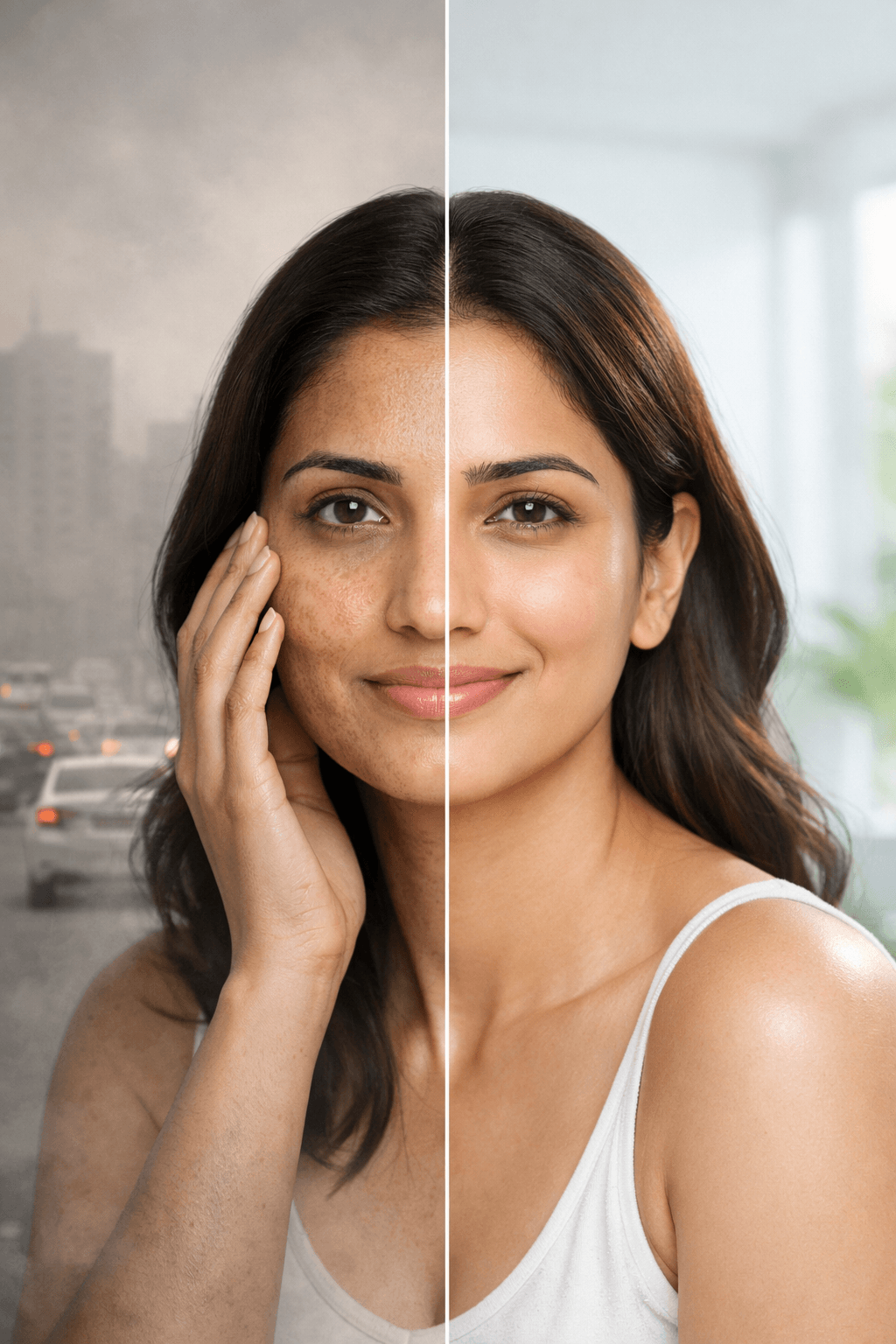
 You step out in the morning feeling fresh, skincare done right, sunscreen on point. By the time you’re back home? Your skin feels sticky, dull, maybe even a little irritated. Sound familiar?
If you live in a busy city, this isn’t just “bad skin days.” This is daily skin damage caused by pollution. Dust, smoke, and tiny pollutants settle on your skin throughout the day, clogging pores and weakening your natural barrier. Over time, this can lead to breakouts, uneven tone, and even premature aging.
Here’s the thing most people think cleansing once at night is enough. It’s not. Pollution doesn’t just sit on the surface; it triggers deeper damage. And if you’re noticing dryness, sensitivity, or sudden dullness, your skin might already be trying to tell you something.
Let’s break it down properly. What pollution really does to your skin and more importantly, how to fix it.
What Are The Signs Of Pollution Damaged Skin?
Look, pollution doesn’t always show up dramatically. It creeps in slowly. One week your skin looks fine, and then suddenly… it doesn’t.
Some of the most common skin damage on the face includes dullness, uneven texture, clogged pores, and frequent breakouts. You might also notice your skin feeling rough even after moisturizing.
Now here’s what many people miss about damaged skin barrier symptoms. This is where things get more serious. Your skin may feel tight, sensitive, or reactive to products that never bothered you before. Redness. Flakiness. That constant “something feels off” feeling.
And yes, pollution can even worsen sun damaged skin. When your skin is already exposed to UV rays, pollution particles increase oxidative stress, making pigmentation and fine lines more visible.
Dermatologists always emphasize this: if your skin barrier is compromised, everything else acne, dryness, sensitivity gets worse.
How To Remove Pollution From Your Face Daily?
Honestly, this is where most people go wrong.
They either over-cleanse or don’t cleanse properly at all.
Here’s what actually works.
Start with a gentle cleanser that removes dirt without stripping your skin. If you wear sunscreen or makeup (which you should), double cleansing helps first with a mild oil-based cleanser, then a water-based one.
Now, don’t skip antioxidants. Serums with Vitamin C or niacinamide help neutralize free radicals caused by pollution. This step is underrated but makes a visible difference over time.
Hydration matters too. When your skin is exposed to pollutants, it loses moisture faster. Use a lightweight moisturizer that supports barrier repair look for ingredients like hyaluronic acid, ceramides, and peptides.
And please avoid harsh scrubs every day. People used to think scrubbing harder meant cleaner skin. Real talk? That just weakens your barrier further.
Consistency beats intensity. Always.
How To Protect Skin From Pollution?
Now let’s talk about prevention. Because fixing damage is great but avoiding it in the first place? Even better.
Sunscreen is non-negotiable. Pollution and UV rays together are a bad combination. A broad-spectrum SPF helps reduce both sun damaged skin and environmental stress.
Next, layering matters. Think of your skincare like a shield.
A good antioxidant serum in the morning helps protect your skin from free radicals. Follow it with a moisturizer that strengthens your barrier. Then sunscreen.
Here’s something people don’t talk about enough your skin barrier is your first line of defense. When it’s strong, it naturally resists pollution better.
So if you’re constantly experimenting with activities or over-exfoliating, you might actually be increasing your skin damage without realizing it.
Sometimes, less really is more.
Who Should See a Dermatologist for Pollution Skin Damage?
You might be wondering “Do I really need professional treatment for this?”
Short answer? It depends.
If your skin still feels dull, congested, or irritated despite a good routine, it’s worth seeing a dermatologist. Especially if you’re dealing with persistent acne, pigmentation, or clear damaged skin barrier symptoms.
Here’s what I’ve seen often: people try everything at home for months, switching products constantly. But without addressing the root cause, the results stay temporary.
Dermatologists can assess your skin properly and recommend treatments that go beyond surface-level care. And honestly, that guidance can save you time, money, and frustration.
Which Skin Treatment is Best to Reverse Pollution Damage?
Now we get to the part where most people are curious about how to actually reverse the damage. Professional treatments can make a big difference here.
One of the most effective options is a hydrafacial in kolkata. It works by deeply cleansing, exfoliating, and removing impurities from your skin while simultaneously infusing it with hydrating serums. This helps clear pollution buildup and restore moisture balance without irritation.
The treatment is gentle, doesn’t hurt, and works on most skin types. That’s why dermatologists often suggest it for skin that looks dull, congested, or tired. If you’re worried about uneven skin tone or pigmentation, getting a skin whitening treatment in Kolkata along with other treatments can help make your skin clearer and brighter over time.
The truth is, topical skincare can only do so much. When pollution-related skin damage builds up, your skin sometimes needs that professional reset. And once you see the glow after a proper treatment? You’ll know what this means.
Also Read: How Effective is HydraFacial for Acne, Pigmentation, and Dull Skin?
Final Thoughts: Your Skin Can Recover If You Let It
Here’s the thing. Pollution isn’t going away anytime soon. But that doesn’t mean your skin has to suffer.
With the right daily care, barrier-supporting ingredients, and occasional professional treatments like hydrafacial in kolkata, you can actually reverse a lot of the visible damage.
Start simple. Cleanse properly. Protect your skin. And if things don’t improve, don’t hesitate to get expert help.
Your skin is resilient. It just needs the right kind of support.