
Dark spots are stubborn. Anyone who has dealt with them knows the frustration of spending money on brightening serums, following every skincare tip online, and still waking up to the same patchy, uneven skin. At some point, you start wondering if an in-clinic treatment is the way to go. Two names come up the most: chemical peel for pigmentation and microneedling for pigmentation. Both are popular. Both have real results behind them. But they work very differently, and what clears one person’s skin might not do much for yours.
What Exactly Is Causing Your Skin Pigmentation?
Pigmentation is caused by an overproduction of melanin, the natural pigment responsible for your skin colour. When something triggers excess melanin in certain areas, it shows up as uneven patches or spots. The common triggers include sun exposure, hormonal changes, acne, or even a small injury like a scratch.
The most common types people deal with:
- Melasma – patchy brown or greyish discolouration that spreads across the cheeks, forehead, or upper lip. It is stubborn because it is often hormone-driven, which means external treatments only go so far without addressing the root cause
- Post-inflammatory hyperpigmentation (PIH) – those flat dark marks that show up after a breakout, waxing irritation, or any skin injury. Extremely common in Indian skin and other South Asian and darker complexions
- Sun spots and age spots – years of stepping out without adequate sun protection catch up with you here. These are well-defined, flat brown spots that cluster on areas like the cheeks, nose, and forehead
- Freckles – small spots, usually genetic, that get more pronounced with sun exposure
The type and depth of your pigmentation plays a major role in deciding which treatment will work best for you.
What Is a Chemical Peel and How Does It Work on Pigmentation?
A chemical peeling treatment for pigmentation involves applying an acid solution to the skin. This controlled exfoliation removes the outermost layers of dead and damaged skin, taking excess melanin deposits along with it.
Types of Chemical Peels Worth Knowing
- Superficial peels use milder acids like glycolic or lactic acid. The skin barely peels, recovery is quick, and they work well for early-stage pigmentation, dullness, and general skin brightening. A good entry point if you have never done a peel before as part of a professional skin treatment in Kolkata
- Medium-depth peels use TCA (trichloroacetic acid) and go deeper. These are the ones dermatologists typically reach for with moderate sun damage, persistent dark spots, or melasma that has not responded to lighter options
- Deep peels use phenol and penetrate quite far into the skin. Reserved for severe or longstanding discolouration, they come with a real recovery period and are not taken lightly by any good clinic
How It Actually Clears Pigmentation
The acid breaks apart the dead, pigment-loaded cells sitting on and near the surface. As those layers peel away, the melanin they were carrying goes with them. Regular sessions also speed up cell turnover and, over time, can slow down overactive pigment production.
So is chemical peel good for pigmentation? Genuinely, yes. Especially for surface-level and sun-related spots, it delivers visible results fairly quickly. The key is matching the peel strength to your skin type and concern
What Is Microneedling and How Does It Target Pigmentation?
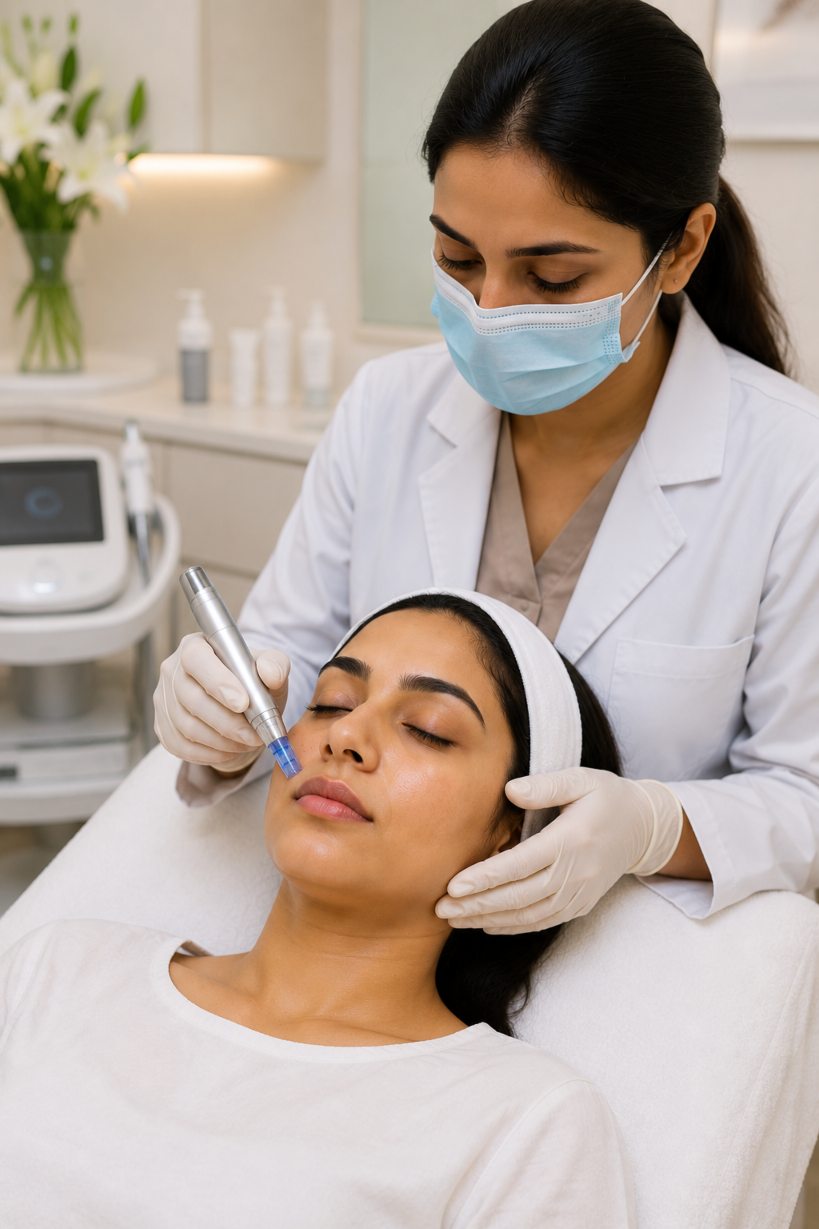
Microneedling uses a device fitted with tiny, fine needles that create thousands of micro-punctures in your skin. These controlled micro-injuries trigger the skin’s natural healing process., Collagen production goes up, new cells regenerate, and skin gradually becomes clearer and more even in texture.
Microneedling Benefits for Pigmentation
- It breaks up clusters of melanin by encouraging faster skin cell renewal
- The micro-channels created during treatment allow brightening serums (vitamin C, tranexamic acid, kojic acid) to absorb far deeper than they ever would on their own
- It improves skin texture at the same time, so you get an overall glow-up, not just spot fading
- It is particularly good for post-acne dark marks, which respond well to the collagen-stimulating effect
- For people with medium to darker skin tones, microneedling for pigmentation tends to be safer than aggressive peels because the risk of triggering new pigmentation is much lower
Which Treatment Works Better for Different Types of Pigmentation?
Here is a straightforward comparison based on pigmentation type:
Pigmentation Type | Chemical Peel | Microneedling |
Sun spots and age spots | Highly effective | Moderately effective |
Melasma | Effective (medium peels) | Effective, especially with serums |
Post-acne dark marks (PIH) | Good for superficial marks | Excellent, especially on darker skin |
Freckles | Works well | Less targeted |
Deep dermal pigmentation | Limited | Better with RF microneedling |
Chemical peels tend to work faster on surface-level and sun-related pigmentation. Microneedling benefits for pigmentation shine when the concern is deeper, scar-related, or involves overall skin texture improvement.
What Are the Key Differences in Downtime, Pain and Recovery?
Chemical Peel Recovery
- Superficial peel: Mild redness and flaking for 3 to 5 days; you can go back to routine activities quickly
- Medium peel: Noticeable peeling, swelling, and redness for 7 to 10 days; social downtime is expected
- Deep peel: Significant recovery of 2 to 3 weeks; usually done under sedation
- Pain level: Stinging and burning sensation during the procedure; medium and deep peels can be quite uncomfortable
Microneedling Recovery
- Redness and mild swelling for 24 to 48 hours; most people look sunburnt for a day or two
- Skin may feel dry or flaky for a few days
- Minimal social downtime for most people
- Pain level: Mild to moderate; a numbing cream is applied beforehand to keep discomfort manageable
Bottom line: Microneedling typically involves less downtime and discomfort than a medium or deep chemical peel. However, a superficial chemical peel is also fairly low-maintenance.
What Do Dermatologists Recommend – Peel, Needling, or Both?
Most experienced dermatologists will tell you there is no universal answer here. What they look at is your specific skin.
Dermatologists consider several factors before recommending a treatment:
- Skin tone: People with darker skin tones are more prone to PIH, meaning a peel that is too strong can actually cause more pigmentation. In these cases, microneedling is usually the safer starting point.
- How deep the pigmentation sits: Surface pigmentation responds well to chemical peeling treatment for pigmentation. Deeper melanin deposits often need microneedling or a layered plan.
- Your schedule and lifestyle: If you cannot take days off for recovery, a medium or deep peel is just not practical right now.
- What you have already tried: If you have been on topical treatments for months without results, it is a sign your pigmentation needs something more targeted.
Which One Should You Choose?
Both chemical peel for pigmentation and microneedling for pigmentation are clinically proven and highly effective when done by a qualified professional. The right choice really comes down to your skin type, the kind of pigmentation you have, and how much downtime you can manage.
At Iniya Aesthetics, we take the time to understand your skin before suggesting anything. We look at your pigmentation type, skin tone, and what you have already tried, and build a plan around what will actually work for you. No guesswork, no unnecessary treatments.