
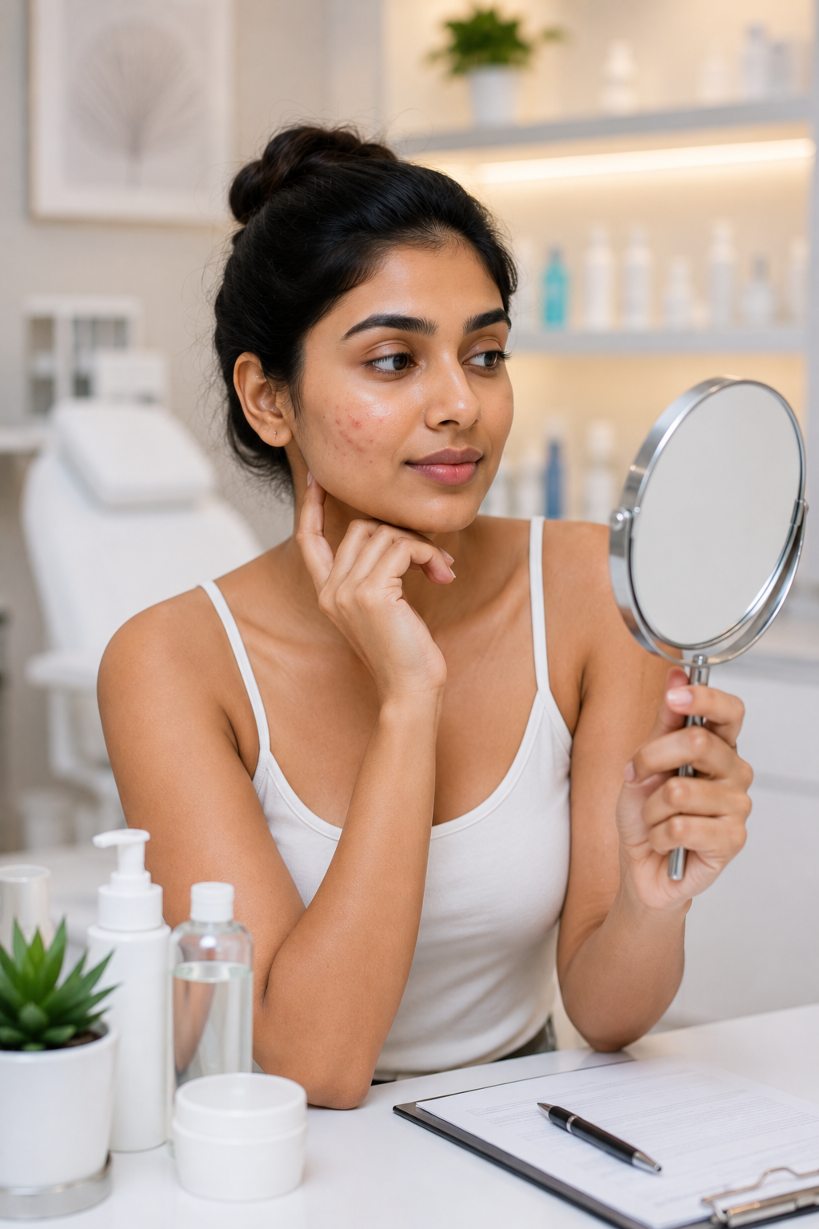
You set your alarm, wake up, look in the mirror, and there it is. A fresh pimple sitting right in the middle of your forehead, the day before something important. If that sounds familiar, trust me, you are in very good company.
Acne is one of those things that makes people feel like they are doing something wrong, even when they are genuinely trying. The truth is, most people are never taught the basics of how to prevent acne properly. They guess, they panic-buy products, and the cycle just keeps going.
What Is Acne and Why Does It Appear on Your Face?
Put simply, acne happens when the pores on your skin get blocked. Inside each pore sits a tiny hair follicle and an oil gland. When dead skin cells, excess oil, or bacteria build up inside that pore, it swells up and becomes what we call a pimple.
Your face is actually the most pore-dense area of your body. More pores mean more oil glands, and more oil glands mean a higher chance of something getting clogged. That is why breakouts show up on the face far more often than, say, your arms or legs.
Acne does not look the same for everyone. It can appear as:
- Whiteheads – small, flesh-colored bumps where the pore is closed and clogged just beneath the surface
- Blackheads – open pores that have collected oil and dead skin; they look dark because of oxidation, not dirt
- Pimples – the classic red, inflamed bumps, sometimes with a white tip
- Cysts – deeper, larger, and far more painful; these sit under the skin and often leave marks behind
Knowing which type you are dealing with helps you figure out how to control acne on face in the most effective way. In many cases, consulting experts for skin treatment in Kolkata can help identify the root cause faster and prevent long-term acne marks or scarring.
What Are the Most Common Causes of Facial Acne?
Here is the part where most skincare articles give you a generic list. But let us actually talk through each cause so it makes sense.
Hormones are probably the biggest culprit. During puberty, the menstrual cycle, pregnancy, or times of hormonal imbalance, your body produces more androgens. These hormones tell your oil glands to produce more sebum. More sebum means more congestion, and more congestion means more breakouts. This is why some people break out at the exact same time every month without fail.
Your skin naturally has bacteria living on it. One type, called Cutibacterium acnes, is harmless under normal conditions. But when pores get blocked and oxygen levels inside drop, this bacteria goes into overdrive. The result is swelling, redness, and those painful pimples that seem to appear out of nowhere overnight.
Then there are the habits most of us do not even notice:
- Resting your chin or cheeks on your hands while sitting at a desk
- Checking your phone screen (which is genuinely one of the dirtiest surfaces you touch all day) and then holding it against your face
- Wearing heavy, pore-blocking makeup but skipping a proper cleanse at night
- Using products that were not made for your skin type
- Eating in a way that spikes your blood sugar repeatedly throughout the day
To learn how to avoid acne long-term, you have to be honest with yourself about which of these habits is yours. Most people, when they look closely, can identify at least two or three.
Which Skincare Habits Help You Avoid Acne Daily?
This is where consistency matters more than anything else. A basic, boring, consistent routine will beat an expensive complicated one every time.
Wash Your Face Twice a Day, Not More
Morning and night. That is all you need. A gentle, non-comedogenic cleanser works perfectly. Avoid anything that leaves your skin feeling tight or squeaky, because that just means your skin is stripped and will overcorrect by producing more oil.
Removing Makeup Before Bed Is Not Optional
Sleeping in your makeup even once in a while does add up. Foundation, concealer, and setting powder all sit in your pores throughout the day. If you do not remove them properly, they stay there overnight and cause congestion. Use a micellar water, cleansing balm, or oil cleanser first, then follow with your regular face wash.
Your Pillowcase Is Probably Dirtier Than You Think
Think about it. Every night, your face presses against the same fabric that collects oil, hair product residue, sweat, and dead skin cells. Sleeping on that builds up over the week. Flipping it over halfway through the week and changing it fully every 7 days is a simple swap that a lot of people notice a genuine difference from.
Stop Touching Your Face
This one is hard because most of us do it without realising. But your fingertips carry bacteria from everything you touch during the day. Every time you touch a spot or absentmindedly rest your face on your hand, you are introducing new bacteria to your skin.
Always Check Labels Before Buying
The words “non-comedogenic” and “oil-free” on a product label mean that it was tested to not block pores. Make this a habit for your moisturiser, sunscreen, and foundation especially.
How Does Your Lifestyle Affect Your Ability To Control Acne on Face?
Skincare products can only do so much. What is going on inside your body shows up on your face, whether you want it to or not.
Stress is a major trigger that most people underestimate. When you are stressed, your body releases a hormone called cortisol. Cortisol tells your oil glands to ramp up production. This is why people who were never acne-prone suddenly start breaking out during exams, big deadlines, or difficult personal periods. Even small daily habits like a short walk, putting the phone down an hour before bed, or doing five minutes of breathing can genuinely help your skin over time.
Food does play a role, but it is more individual than most articles admit. Research does show that high-glycemic foods like white rice, sugary drinks, white bread, and packaged snacks can spike insulin and worsen acne for many people. Dairy is another common trigger, particularly skim milk. That said, not everyone reacts the same way. If you suspect a food is breaking you out, try cutting it out for three to four weeks and see if things change.
Drink more water. This one sounds too simple but dehydrated skin can actually produce more oil as a defense mechanism. Keeping your hydration up keeps your skin balanced.
Sleep is when your skin repairs itself. Less than 6 hours regularly increases inflammation throughout the body and that inflammation shows up on your face. If clear skin is a priority for you, sleep has to be too.
After the gym, always cleanse your face. Sweat sitting on your skin after a workout mixes with the bacteria already there and can cause what is sometimes called “workout acne,” especially along the hairline and jaw.
Which Skincare Ingredients Actually Prevent Acne on Face?
Knowing how to reduce acne on face gets a lot easier when you understand what ingredients to actually look for. Here is a breakdown of the ones with real evidence behind them:
- Salicylic Acid – This one gets inside the pore and breaks down the oil and dead skin buildup. It is the best starting point for blackheads and mild congestion. Look for it in cleansers or light serums.
- Benzoyl Peroxide – This targets acne-causing bacteria directly. Excellent for red, inflamed pimples. Start with a lower concentration (2.5%) to reduce irritation.
- Niacinamide – Calms redness, helps regulate oil production, and is gentle enough for sensitive skin. A crowd favourite for very good reason.
- Retinol or Retinoids – These speed up how quickly your skin cells turn over, which stops dead cells from sitting in pores long enough to cause blockages. Very effective, but introduce slowly as they can cause initial dryness.
- Tea Tree Oil – A gentler, more natural option that has real antimicrobial properties. Works well for mild breakouts. Always dilute it with a carrier oil or use a product that contains it at a safe concentration.
- Azelaic Acid – Does double duty: fights bacteria and reduces the dark marks that acne leaves behind. Brilliant for anyone dealing with post-acne hyperpigmentation.
One important note: do not try everything at once. Introduce one new active ingredient at a time, give it a few weeks to work, and always wear SPF during the day when using any actives.
When Should You See a Dermatologist for Acne?
There is a point where home care reaches its limit, and knowing when that line is crossed can save you months of frustration and possible scarring.
Book an appointment with a dermatologist if:
- Your breakouts are deep, cystic, or consistently painful and nothing over-the-counter is making a dent
- You are noticing acne scars or dark patches forming and not fading on their own
- Your acne is affecting how you feel about yourself day to day
- You have been consistent with a routine for 10 to 12 weeks and seen no real improvement
- Your breakouts came on suddenly and severely, which can sometimes signal a hormonal or internal issue
Dermatologists have access to prescription-strength treatments like topical antibiotics, oral medications, spironolactone for hormonal acne, and clinical procedures that go well beyond anything available at a pharmacy counter.
There is absolutely no reason to push through severe acne alone when professional help is available.
Final Thoughts
Figuring out how to prevent acne on face comes down to a few honest habits, the right ingredients, and a bit of patience with your own skin. There is no single product that fixes everything overnight, and anyone who promises otherwise is selling you something.
Start with the basics. A consistent cleanse, hands off your face, clean pillowcase, non-comedogenic products. Then layer in one targeted ingredient. Give your skin real time to respond, at least 4 to 6 weeks, before deciding something is not working.
At Inaya Aesthetics, we believe every skin concern deserves personalised care rather than guesswork. If you are searching for trusted skin treatment in Kolkata, our experts help create customized acne solutions based on your skin type, lifestyle, and long-term skin goals.