
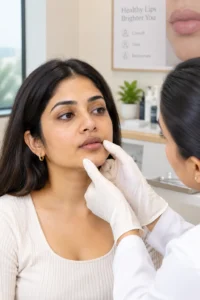
 Nobody decides to have darker lips. It happens slowly, so slowly that you probably notice it only under a harsh bathroom light, or on the day a lipstick that always looked rosy on you turns a little muddy. So you try the usual suspects: a beetroot hack from a reel, a lemon and sugar scrub your aunt swears by, three different lip balms in a single week. A month later the color hasn’t budged. Your lips are just more irritated than before.
Lip pigmentation is very common, and it’s rarely a sign of anything serious, but fixing it properly starts with understanding why it happened in the first place. What follows covers what actually darkens lips, what’s worth doing at home, and which clinical options step in when the basics don’t, so if dark lips treatment has been sitting on your to-do list for a while, this is a decent place to begin.
What Causes Dark Lips and Lip Pigmentation?
Lip skin is nothing like the skin on the rest of your face: it’s far thinner, it has almost no oil glands to keep it supple, and it dries out in a hurry. The pink-red tone you think of as healthy lips is mostly blood vessels showing through that thin layer. Lip pigmentation shows up when the pigment-making cells there, called melanocytes, start producing more melanin than usual, and the extra pigment settles in.
Plenty can set that off. Genetics is the big one, since people with deeper skin tones often have naturally darker lips, and that’s a normal variation rather than a problem waiting to be fixed. Sun is another, because lips take a lot of UV and almost never get sunscreen. Then there’s chronic irritation (constant licking, peeling, a reaction to a lip product), along with hormonal shifts, certain medicines and nutritional gaps such as low vitamin B12. That last group is exactly why a sudden change deserves attention.
Can Smoking, Dehydration or Lip Balms Darken Your Lips?
Yes, all three can, though each one does it differently.
- Smoking: the heat and the nicotine both stimulate melanocytes, so regular smokers often end up with a smoky, uneven darkening that deepens over the years.
- Dehydration and licking: being dehydrated doesn’t create pigment by itself. But dry, cracked lips make people reach for their tongue or pick at flakes, and that repeated irritation is a classic trigger for darkening after inflammation.
- Lip balms and lipsticks: fragrance, flavoring, certain dyes and preservatives can cause a mild allergic reaction on the lips. They turn darker, drier and chapped all at once, and the natural response is to apply more of the same product. It’s a loop.
If your lips looked worse right after you switched to a new “hydrating” balm, treat that as a clue, not a coincidence.
Also Read: Why Dark Spots Are More Common in Indian Skin Types
Which Home Remedies Actually Help Lighten Dark Lips?
Here’s the honest version. Home care can stop your lips from getting darker and can lift dullness, but it rarely lightens established pigment by much, so if you’ve been wondering how to remove dark lips at home, the boring habits will do more than the viral hacks.
- Put SPF on your lips every day. Pick a balm with SPF 30 or higher and reapply after eating or drinking. This is the single most useful step, because UV keeps feeding the pigment.
- Switch to a plain, fragrance-free balm with something like petrolatum or shea butter, and drop anything that tingles, smells strongly, or tastes like candy.
- Exfoliate gently, once a week at most. A soft damp cloth or a very light sugar and honey mix is plenty, and scrubbing hard only creates the inflammation you’re trying to avoid.
- Stop licking and picking. Easier said than done, but it matters more than any ingredient on this list.
- Cut back on smoking and drink enough water if either of those applies to you.
Skip the lemon juice and the toothpaste. Both are popular, both irritate, and lemon followed by sun exposure can cause a burn-like reaction that leaves darker patches behind, which is the opposite of the plan. Pharmacy bleaching creams deserve the same caution, since many contain strong ingredients that thin lip skin doesn’t tolerate well without supervision.
Which Clinical Treatments Work Best for Lip Pigmentation?
When home care hasn’t moved things after two or three months, clinical lip lightening can make a visible difference, though the right option depends on how deep the pigment sits and what caused it. That’s why a proper assessment comes first.
Chemical Peels for Lip Lightening
Gentle, lip-safe peels loosen and lift the pigmented surface layer, and a short course can brighten lips noticeably. A chemical peel in Kolkata for the lips isn’t the same as one for the face, though: the formulation and strength are different, and thin lip skin needs far more careful handling than a cheek would.
Laser Toning
For deeper or more stubborn pigment, pigment-targeting lasers break melanin into tiny particles that your body then clears away over the following weeks, which is why it usually takes several sessions spaced a few weeks apart and not just one.
Topical Treatments and Skin-Brightening Plans
A doctor may prescribe short-term lightening creams such as azelaic acid or kojic acid. And if your lips are darker as part of a generally uneven skin tone, a wider skin whitening treatment plan may make more sense than treating the lips on their own.
Two practical notes. If you get cold sores, say so before any peel or laser session, because both can trigger a flare-up and your doctor may suggest a preventive antiviral. And lip fillers in Kolkata can improve hydration, shape and volume, but they don’t change pigment. That’s a separate decision, not a substitute for treating the color.
When Should You See a Dermatologist for Dark Lips?
Most dark lips are harmless, but a few changes deserve a proper look. See a doctor if a single dark spot appears suddenly, has an irregular edge, keeps changing, or bleeds. The same goes for darkening that shows up alongside unusual tiredness, weight loss, or dark patches elsewhere on the body or inside the mouth, because some hormonal and nutritional conditions announce themselves on the lips first. And if your lips stay red, swollen and sore after using a product, stop using it and get checked.
A qualified skin specialist can work out whether you’re dealing with simple pigmentation, an allergic reaction, or something else entirely, and then build a plan around the real cause instead of guessing. That alone saves months of trial and error.