
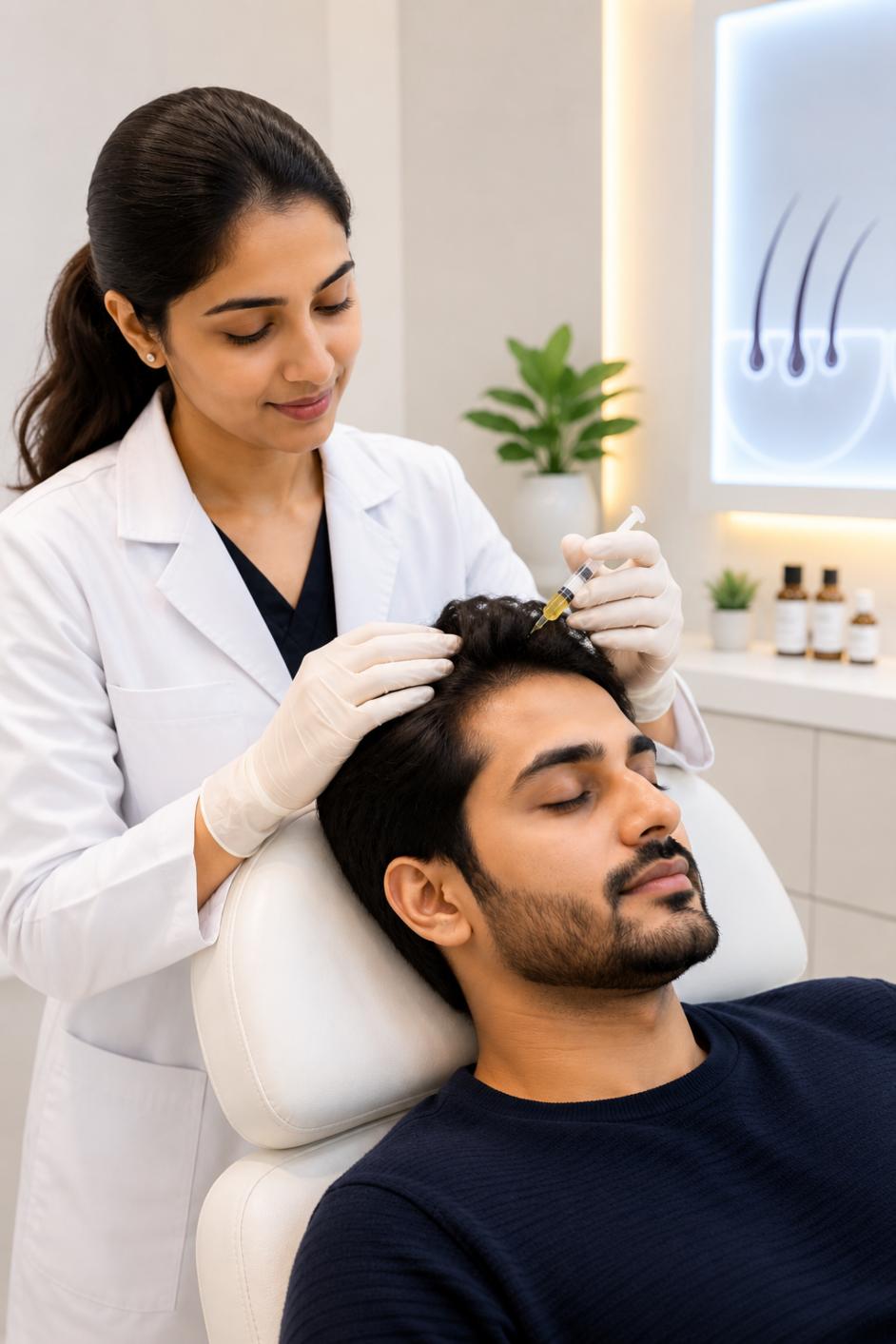
 PRP stands for Platelet-Rich Plasma. Your blood is made up of different components. One of them is plasma, the liquid portion that carries your blood cells around. Within that plasma live tiny structures called platelets. Now, platelets are known for clotting cuts, but their bigger job is healing. When your body is injured, platelets flood the area and release what are called growth factors, basically biological signals that tell surrounding cells to repair and regenerate.
Platelet rich plasma PRP for hair loss takes this natural healing ability and puts it to work directly on your scalp. Here is the process, step by step:
- Blood is drawn from your arm, a small amount, similar to a routine blood test
- The sample goes into a centrifuge that spins rapidly, separating the components by density
- This leaves behind a concentrated dose of platelet-rich plasma
- That concentrate is then injected into targeted areas of the scalp where hair is thinning or has stopped growing
When those growth factors hit the scalp tissue, they increase blood flow to the follicles, reduce inflammation, and nudge dormant or weakening hair roots back into an active growth phase. Because everything used comes from your own body, there is virtually no risk of an allergic reaction or rejection.
Which Types of Hair Loss Can PRP Actually Treat?
This is a question worth taking seriously, because PRP is genuinely effective for certain conditions and much less so for others.
- Androgenetic Alopecia – Commonly called male or female pattern baldness, this is the most frequently treated condition with PRP therapy for hair. When follicles are miniaturising but still active, PRP can slow the progression and stimulate regrowth. Earlier intervention tends to give better outcomes.
- Alopecia Areata – This autoimmune condition causes patchy hair loss. PRP has shown real promise here, particularly in patients who have not responded well to conventional treatments.
- Diffuse Thinning – If your hair has gradually become lighter and less dense all over rather than in specific patches, PRP can help thicken and strengthen existing strands.
- Post-Partum Hair Loss – Hormonal changes after childbirth can cause significant shedding. PRP supports faster recovery by giving weakened follicles a boost.
Where PRP does not help is in cases of complete follicle death or heavy scarring on the scalp. If the root is gone, there is nothing to stimulate. A proper scalp assessment before starting any treatment is essential for this reason.
What Does the Hair Regrowth Timeline Look Like Month by Month?
People often come into their first session expecting to walk out with a fuller head of hair. That is not how platelet plasma treatment for hair loss works, and any clinic that promises rapid miracles should be approached with caution.
Here is a realistic picture of what the journey actually looks like:
Months 1 and 2
This is the quiet phase. Underneath the surface, blood supply to the follicles is improving and growth factors are doing their work. Most people notice that hair fall starts to slow down. Do not be discouraged if you see very little visible change yet.
Months 3 and 4
This is usually when patients start getting genuinely excited. Fine new hairs begin to push through, especially around the hairline and temples. Hair that was thinning begins to look a little denser and less flat.
Months 5 and 6
Visible results are now more consistent. Volume improves, hair feels stronger, and the overall texture tends to be healthier. Photographs taken now versus before treatment usually show a clear difference.
Months 6 to 12
This is the phase that makes the whole process worthwhile. Continued sessions during this window reinforce what has already been built. Most patients are genuinely pleased with where things stand by the end of this period.
A quick reminder though: individual results really do vary. Your age, the stage of hair loss, your general health, and how consistently you follow the treatment schedule all influence how much you benefit.
How Is PRP Different From GFC or Mesotherapy for Hair Loss?
If you have spent any time researching hair loss treatments online, you have almost certainly seen GFC and Mesotherapy mentioned alongside PRP. They are not the same thing, and choosing between them matters.
Treatment | What It Uses | How It Works |
PRP | Platelet-rich plasma from your own blood | Platelets release growth factors into the scalp naturally |
GFC | Growth factors isolated and concentrated from your blood | More potent concentration, targets follicles more specifically |
Mesotherapy | A customised cocktail of vitamins, minerals, and peptides | Delivers nutrients directly into the scalp tissue |
A few things worth keeping in mind:
- PRP is entirely autologous, meaning it comes from you, which makes it one of the safest options from an allergy standpoint
- GFC is essentially a refined version of PRP, with a higher concentration of growth factors. Some patients see faster initial results with it
- Mesotherapy works differently. It does not use your blood at all. Instead, it feeds the scalp with external nutrients and is often used to complement other treatments
- The right choice depends on your specific hair loss type, your scalp condition, and how far the loss has progressed
A good dermatologist will not push you toward any one option without understanding your full picture first.
How Many Sessions Do You Need and How Long Do the Results Last?
One of the most practical questions, and one that deserves a straight answer.
How Many Sessions
The typical starting protocol for PRP therapy for hair looks like this:
- Induction phase: 3 to 4 sessions over 3 to 4 months, roughly one session per month
- Maintenance phase: Once every 4 to 6 months to sustain and build on results
Some patients need additional sessions in the first year depending on how significant their hair loss is and how their scalp responds. There is no universal formula.
How Long Results Last
PRP is not a permanent fix. Think of it more like maintenance for your scalp, similar to how you would maintain your skin with regular care. Without follow-up sessions, results gradually fade over time. With consistent maintenance, many patients sustain noticeably improved hair density for several years.
It also helps to pair PRP with complementary habits, good nutrition, adequate sleep, stress management, and if your doctor recommends it, medications like minoxidil or finasteride to address the hormonal side of hair loss.
Considering PRP in Kolkata? Here Is What to Know
For anyone looking into PRP in Kolkata, the good news is that the city has several qualified clinics offering this treatment. The less good news is that quality varies considerably, and it pays to be selective.
When evaluating your options for PRP treatment in Kolkata, a few things to look for:
- The procedure should be performed by or under the direct supervision of a qualified dermatologist or trichologist, not just a technician
- The clinic should use a proper medical-grade centrifuge. Equipment matters more than most people realise
- A good clinic will conduct a thorough consultation before touching your scalp, not just a five-minute chat before booking you in
- Be wary of unusually low pricing. PRP requires specific equipment, proper sterile technique, and clinical expertise. If the price seems too good to be true, something is likely being cut.
Also Read: PRP vs GFC: Which Hair Regrowth Treatment is Better?
Final Thoughts
There is no shortage of hair loss products in the market. Most of them make big promises and deliver modest results at best. PRP is different, not because it is perfect, but because it works with biology rather than against it.
If you have been watching your hair thin out and feel like you have already tried everything, it might be time to have a proper conversation with someone who can actually assess what is happening on your scalp and build a plan around your specific situation.
At Iniya aesthetics clinic in Kolkata that is exactly what we do. We take hair loss seriously because we know what it does to a person’s confidence and quality of life. Our approach is clinical but personal. We do not believe in one-size-fits-all solutions, and we will not recommend a treatment unless we genuinely believe it is right for you. Whether you are in the early stages of thinning or have been struggling with significant hair fall for years, our team is here to help you figure out the path forward. Your hair can get better. It starts with the right conversation.