
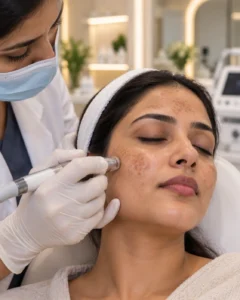
 Somewhere around the second trimester, or sometimes months after delivery, a lot of new mothers notice patches of darker skin settling across their cheeks, forehead, or upper lip that weren’t there before. It’s common enough to have its own nickname, the pregnancy mask, though the more clinical term is melasma. And if you’re currently staring at a mirror wondering why it hasn’t faded yet, you’re dealing with one of the most search-heavy postpartum skin concerns out there for good reason.
The good news is that pregnancy mask melasma is well understood and, in most cases, manageable. The less convenient news is that it responds to a specific, patient approach rather than a quick fix, especially if you’re breastfeeding.
What Is Pregnancy Mask (Melasma) and Why Does It Happen?
Melasma is a form of hyperpigmentation where certain skin cells, called melanocytes, start producing excess melanin in patches, typically across the cheeks, forehead, nose bridge, and upper lip. When it’s triggered by pregnancy, it earns the nickname pregnancy mask, though the same condition can appear in people who’ve never been pregnant, particularly with hormonal birth control or sun exposure as the trigger.
What makes pregnancy-related melasma distinct is timing. It often appears or worsens during the second half of pregnancy and can persist or even become more noticeable in the months after delivery, which is why so many new mothers are searching for answers well after the baby has arrived rather than during pregnancy itself.
Why Does Melasma Develop During or After Pregnancy?
The short answer is hormones. Pregnancy causes a sharp rise in estrogen and progesterone, and both hormones stimulate melanocyte activity more than usual. These overstimulated cells produce more pigment than the skin needs, and it settles into visible patches rather than distributing evenly.
Genetics plays a real role here too. Not everyone who goes through the same hormonal shifts develops melasma, which suggests some people’s melanocytes are simply more reactive to hormonal signals than others. If melasma runs in your family, or if you have a naturally deeper skin tone, which tends to have more active pigment-producing cells overall, your odds of developing it go up.
What Causes Face Pigmentation After Pregnancy?
Hormones set the stage, but sun exposure is what keeps the pigmentation going, and often makes it worse. UV rays independently stimulate melanocyte activity, so even brief, regular sun exposure, the kind that happens on a school run or a balcony coffee, can deepen existing melasma or trigger new patches, regardless of hormone levels.
For many women, melasma does fade on its own as hormones rebalance in the months following delivery. But if sun protection wasn’t consistent, if hormonal birth control was started postpartum, or if there’s a genetic predisposition, the pigmentation can persist well beyond that window and needs active treatment rather than just time.
Melasma also tends to sit deeper in the skin than everyday sun spots or acne marks, which is part of why it’s notoriously slow to respond and quick to return. Regular pigmentation usually clears with consistent surface-level care. Melasma is hormonally driven from a deeper layer of skin, which is why dermatologists treat it as a condition to manage long-term rather than a mark to simply fade once.
What Can You Do at Home Before Seeing a Dermatologist?
A few habits make a measurable difference even before any clinical treatment starts, and they matter just as much afterward to protect results:
- Wear broad-spectrum SPF 30 or higher every single day, rain or shine, indoors or out, since UV and even visible light through windows can trigger melanocyte activity.
- Reapply sunscreen through the day if you’re outdoors for more than a couple of hours, since most people apply far less than the amount actually needed for full protection.
- Add a wide-brimmed hat for direct sun exposure, especially during peak midday hours.
- Be patient with gentle actives like vitamin C or niacinamide, which support skin tone gradually rather than overnight, and are generally considered safer choices during breastfeeding than stronger prescription options.
- Avoid picking at or aggressively exfoliating pigmented patches, which can worsen inflammation and, ironically, deepen the pigmentation response.
These steps won’t erase established melasma on their own, but they create the right conditions for clinical treatment to actually work instead of fighting an uphill battle against daily sun exposure.
What Treatments Can Help Reduce Melasma After Pregnancy?
This is where timing matters enormously, especially if you’re breastfeeding. Several highly effective melasma ingredients, including hydroquinone and retinoids, aren’t recommended during pregnancy and need caution during breastfeeding, so it’s worth working with a dermatologist rather than self-treating with whatever’s marketed as a “pigmentation fix.”
Once breastfeeding considerations are cleared, or for pigmentation appearing well after delivery, a combination approach tends to work better than any single product. At Iniya Aesthetics, postpartum pigmentation is treated as an ongoing protocol rather than a one-time fix, because melasma is a condition that needs to be controlled and maintained, not permanently erased in a single visit. This typically involves chemical peel treatments to exfoliate pigmented surface layers, glutathione treatment to support overall skin brightness, and medical-grade topical regimens suited to postpartum skin, layered together over several sessions rather than expected from one.
Also Read: Postpartum Hair Loss: Causes and Solutions Every New Mom Should Know
It’s worth mentioning that postpartum hair fall is another hormone-driven change that tends to show up around the same time as postpartum pigmentation, and the two often get investigated together during a postpartum skin and hair consultation.
Whatever combination of treatments you land on, one thing isn’t optional: sunscreen. Skipping daily sun protection while undergoing melasma treatment doesn’t just slow progress, it can actively undo it, since UV exposure re-triggers the same melanocyte activity you’re trying to calm down.
When Should You See a Dermatologist for Pigmentation After Pregnancy?
If your pigmentation hasn’t started fading within about six months of delivery, that’s a reasonable point to stop waiting it out and get it professionally assessed, since persistent melasma at that stage usually needs active treatment rather than time alone. It’s also worth seeing a dermatologist sooner if the patches are spreading, if they’re affecting your confidence day to day, or if you’re unsure which over-the-counter products are actually safe to use while breastfeeding.
A proper consultation with a dermatologist in Kolkata can also rule out other causes of facial pigmentation that sometimes get mistaken for melasma, since the treatment approach differs depending on what’s actually driving the discoloration.